Book Your Free Demo Class
Submit this form and get an instant call from us. We will share you a demo class schedule.


Yes, reading genuinely helps your spoken English — but only if you pick books that match your level and read some of it out loud. It builds the vocabulary and sentence rhythm that speaking depends on, though it won't replace actual speaking practice on its own. Below is a list of novels and books to improve your spoken English, split by level, plus a reading habit that actually works, not just "read 20 minutes a day."
It's a fair question, and honestly, it comes up a lot. Search "books to improve English" or "novels to improve English" online and you'll find dozens of lists, most of them recycling the same ten titles without ever answering whether reading actually works. So let's answer it properly instead of assuming.
Reading builds three things that speaking depends on directly. First, vocabulary that arrives with context — you don't just memorise a word, you see exactly how it's used, which sticks far better than a flashcard ever does. Second, sentence rhythm. You absorb, almost without noticing, how a native or fluent writer strings ideas together, and that rhythm starts showing up in your own sentences over time. Third — and this is the part most reading lists skip entirely — reading aloud specifically trains pronunciation. It exercises the same muscles you use when speaking, and it forces you to actually produce sounds you'd otherwise just recognise silently.
What reading doesn't do, though, is replace conversation. You won't get fluent from books alone, and any list that implies otherwise isn't being straight with you. Think of it this way: reading builds the raw material, speaking practice is what turns that material into fluency. You need both.
Most advice here stops at "read 20 minutes a day," which sounds nice and rarely survives a busy week. So here's something more specific.
Start with a book you'd actually want to read anyway — not a "classic" you feel obligated to finish out of guilt. That guilt, more often than not, is exactly why the book ends up abandoned on a shelf. Next, read the first chapter before committing to the whole thing. If it doesn't hold your attention in ten pages, it probably won't in two hundred either, and that's fine — put it down and try another.
Here's the one habit that actually connects reading to spoken English specifically: read at least one passage out loud every session, even just a paragraph. Silent reading builds vocabulary. Reading aloud builds the muscle memory your mouth needs for actual speech. And finally, track books finished, not minutes spent reading. Finishing something is what builds momentum — an unfinished book on your nightstand does nothing for your English, however many minutes you logged getting halfway through it.

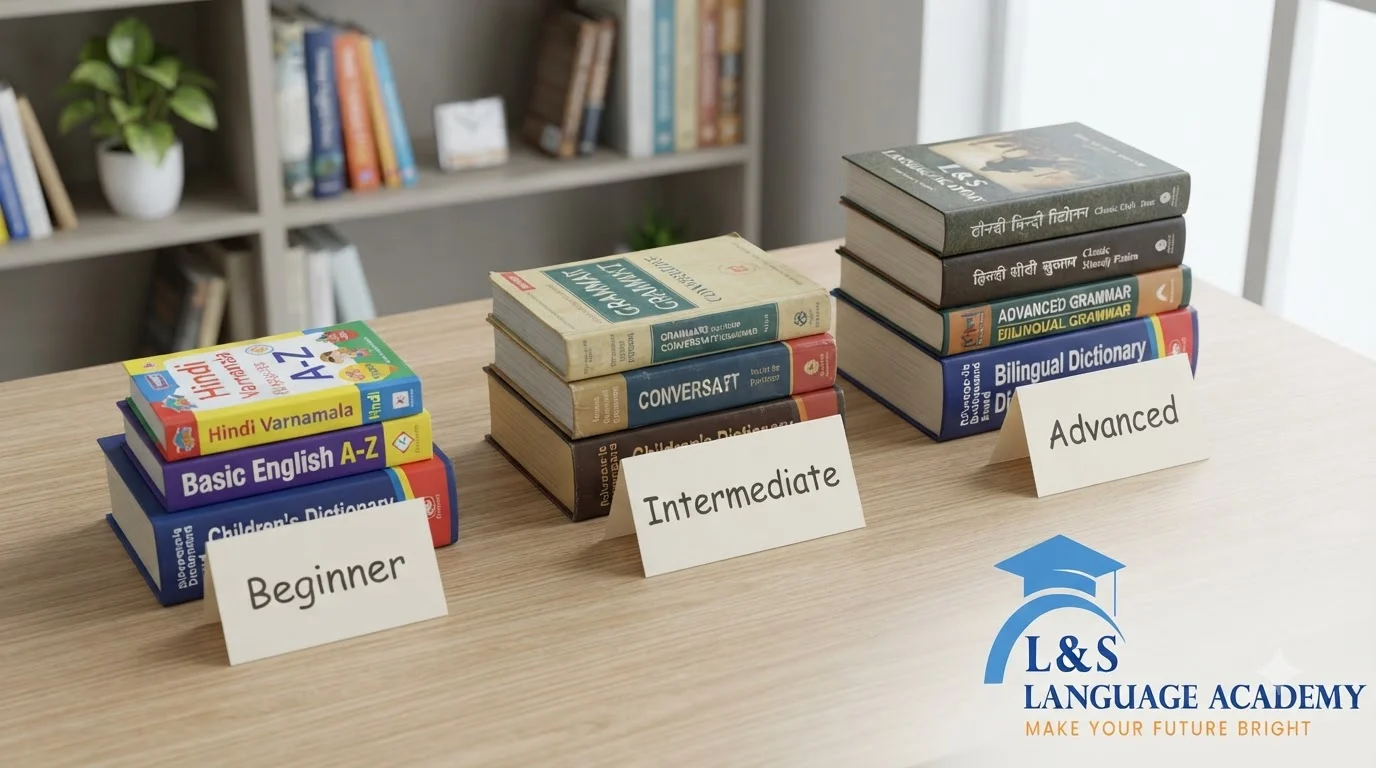
If you're at LNS Beginner level, or just starting out on your own, these books use short sentences, high-frequency vocabulary, and very little idiom — which means fewer moments where you're stuck guessing what a phrase actually means.
A simple, warm story about a pig and the spider who befriends him. The sentences are short and the vocabulary is deliberately gentle, which makes it one of the easiest full novels to actually finish as a beginner — and finishing matters more than difficulty at this stage.
Originally written in Portuguese, but the English translation is famous for being clean and uncomplicated. Short chapters, simple sentence structures, and a story that keeps you turning pages — a genuinely good pick if you want something with more substance than a children's book but still easy to follow.
Worth including specifically for Indian readers: Bhagat writes in plain, conversational English, close to how people actually talk, which makes the jump from page to spoken sentence noticeably smaller than with a denser Western classic.
Playful, funny, and full of simple dialogue you can practically hear being spoken — good material for reading passages aloud, since Dahl writes the way people talk, not the way essays are written.
At LNS Intermediate, you're past basic survival English and into handling real conversation, emails, and short presentations. These books add longer sentences and a bit more idiom, but reward inference rather than forcing you to look up every third word.
A powerful, emotionally direct story with prose that's rich but never unnecessarily complicated. It's a good bridge book — more demanding than a beginner pick, but written to be genuinely readable rather than deliberately difficult.
Partly set in Pondicherry, India, which makes some of the early cultural context immediately familiar if you're an Indian reader. The vocabulary steps up a notch, and the storytelling rewards careful reading without being inaccessible.
This one's worth a special mention: Lahiri writes about a Bengali family navigating identity between Kolkata and the United States. If you're learning English in Kolkata, there's something genuinely useful about reading a story that understands exactly where you're starting from.
Easy to follow but not simplistic — the story is told from multiple viewpoints, which is good, gentle practice for following slightly more complex narrative structure without the sentences themselves getting harder.
Here's where the list changes shape a bit. If you're at LNS Advanced, you're likely reading for interviews, presentations, or further study — and that calls for professional and academic register, not just more difficult fiction. So this tier leans into nonfiction, deliberately.
Genuinely sophisticated vocabulary, but written clearly enough to follow without a dictionary on hand. Excellent practice for the kind of structured, argument-driven English you'll need in a presentation or a serious workplace discussion.
A Booker Prize-winning novel with a sharp, distinctive voice — worth reading for register alone, since Adiga's narrator shifts tone constantly, which is exactly the kind of flexibility advanced speakers eventually need.
Analytical, argument-led nonfiction that's still genuinely readable. Good training for the kind of clear, structured explaining that comes up constantly in interviews and professional conversations.
A memoir with a distinctive, confident narrative voice and consistently sophisticated sentence construction — a strong choice if your goal is the kind of fluent, nuanced English that holds up in an unscripted, high-stakes conversation.
Knowing what to read is one thing. Actually getting hold of it without waiting a week for delivery is another, so here's the practical part.
College Street is the obvious answer, and for good reason. It's one of the largest second-hand book markets in the world, and you'll find most of these titles there for a fraction of a new copy's price — worth a Sunday morning trip if you live anywhere near central Kolkata. Oxford Bookstore on Park Street and Starmark are reliable for new copies if you'd rather not hunt through stalls, and both stock a decent English-fiction section. For contemporary Indian authors like Chetan Bhagat, most local bookstores keep several copies in stock precisely because they sell so consistently.
If you're short on time, Kindle or the Amazon India app gets you reading within minutes, and most of these titles are available as ebooks. Just remember: whichever format you choose, the reading-aloud habit still applies. A book on a screen works exactly the same way a physical copy does, as long as you're actually reading some of it out loud.
We'd rather be honest about this than sell you a shortcut that doesn't exist. Reading builds vocabulary and passive exposure extremely well. What it can't do, structurally, is correct your pronunciation in the moment, push you to respond under real conversational pressure, or catch the specific errors you keep repeating without noticing. That's what a real, live course does — and it's precisely the gap self-study alone can't close, however many books you get through.
So use this list to build your foundation. Then pair it with actual speaking practice, ideally with someone correcting you as you go.
If you're already reading through this list, a structured spoken English course is the natural next step. At LNS, Beginner starts from ₹5,000 for batch classes offline (₹3,000 online), running up through Intermediate and Advanced to ₹25,000 for one-to-one Advanced coaching. Full fee breakdown and level details are on our spoken English course page.
It'll genuinely help — reading builds vocabulary, grammar sense, and natural sentence flow. But fluency itself needs speaking practice too. Reading gets you the raw material; conversation is what turns it into fluency.
Yes, more than silent reading does for this specific purpose. Reading aloud trains the same muscles and rhythm you use in real conversation, and it's one of the fastest ways to catch pronunciation habits you didn't know you had.
Reading alone isn't enough on its own — you also need regular conversation practice. The honest answer is that they do different jobs: reading builds vocabulary and structure, speaking practice builds the actual ability to produce it under pressure.
There's no fixed number, but finishing three to four books at your level, reading a little most days, typically produces a noticeable vocabulary and confidence shift. Consistency matters far more than speed here.
That's completely normal, and honestly expected. Try to guess meaning from context first rather than stopping at every unfamiliar word — that's a real skill in itself, and it's closer to how you'll actually process fast, real-world English.
Something genuinely simple and enjoyable rather than a dense classic — Charlotte's Web or Charlie and the Chocolate Factory both work well as a first full book, since short sentences and clear vocabulary make them realistic to actually finish.
They're useful for listening comprehension and picking up natural pronunciation, but they don't build the same active reading-and-recognition skill that seeing the words on a page does. Ideally, use both rather than choosing one over the other.
Vocabulary gains show up fairly quickly, often within a few weeks of regular reading. Sentence structure and natural rhythm take longer to surface in your own speech, usually a few months of consistent reading combined with actual speaking practice.
This list gives you the foundation. A structured course, with real correction and speaking practice, is what actually gets you talking. Book a free demo class and see how the two work together.