
How Long Does It Actually Take to Speak English Fluently? A Realistic Timeline by Starting Point
There isn't one true number, and anyone who gives you a confident single answer probably hasn't defined what "fluent" means first. If you've searched to learn English fast and landed on six different answers, that's not you doing anything wrong — the answers genuinely do contradict each other. What we can give you is an honest range, tied to your actual starting point, plus the specific things that speed it up or slow it down. That's more useful than another guess, so let's get into it.
Table of Contents
- Why Every "X Months" Answer Online Contradicts the Next One
- What "Fluent" Actually Means, Before We Give You a Number
- The Things That Actually Determine Your Timeline
- A Quick, Honest Look at the FSI Framework
- Realistic Timelines, Mapped to Actual Levels
- What's Realistic in 30 Days, and What Isn't
- What Actually Speeds This Up
- Frequently Asked Questions
Why Every "X Months" Answer Online Contradicts the Next One
We went and checked what's actually written on this question before deciding what to say ourselves, and honestly, the spread is a little embarrassing. One well-known spoken English site says six months of daily practice. Another claims you need at least a year and roughly 1,000 hours. A language school blog says three months is enough — though that specific claim turns out to be about their intensive immersion program, a completely different starting condition from two evening classes a week, and that context isn't mentioned anywhere near the headline number. Yet another source lands somewhere in between, six to twelve months, and at least tries to explain why by referencing a real, well-known framework for how starting language affects timeline.
So which one's right? Here's the honest answer: probably none of them, exactly, because they're quietly answering different questions. "Basic confidence" and "fluency" aren't the same claim. An immersion program and a weekly class aren't the same starting point. Almost nobody states which one they actually mean before quoting a duration — and that's the real problem with most of what's out there, not that the numbers themselves are wrong.
What "Fluent" Actually Means, Before We Give You a Number
This is the step nearly every competing page skips. So let's not skip it.
"Fluent" gets used to mean wildly different things depending on who's saying it. For some people, it means holding a basic conversation without long, awkward pauses. For others, it means handling a fast, unscripted professional discussion — interrupting, disagreeing, making a point under pressure — in a second language. Those are genuinely different skills, needing genuinely different amounts of time. A course, or an article, that quotes one number for "fluency" without saying which of these it means is giving you a number that doesn't actually apply to your specific goal.
The Things That Actually Determine Your Timeline
Rather than one guess, here's what genuinely moves the number, and all of it is something you can honestly assess about yourself right now.
Where you're actually starting from. Most adult learners in Kolkata aren't a blank slate. Years of school English — heavy on reading and grammar, light on actually speaking — is a real starting point, and it's different from zero, and different from fluent. Knowing which one you are changes everything else on this list.
Real speaking practice hours, not just exposure hours. Watching English shows and scrolling English content builds listening comprehension. It doesn't build the specific muscle of producing a spoken sentence, under time pressure, with someone waiting for your answer — and that muscle is most of what "fluent" actually means.
Whether there's real-time correction happening. Practice without correction can build bad habits just as easily as good ones. A wrong sentence structure repeated fifty times doesn't become right through repetition alone — it just becomes a comfortable habit that's harder to fix later.
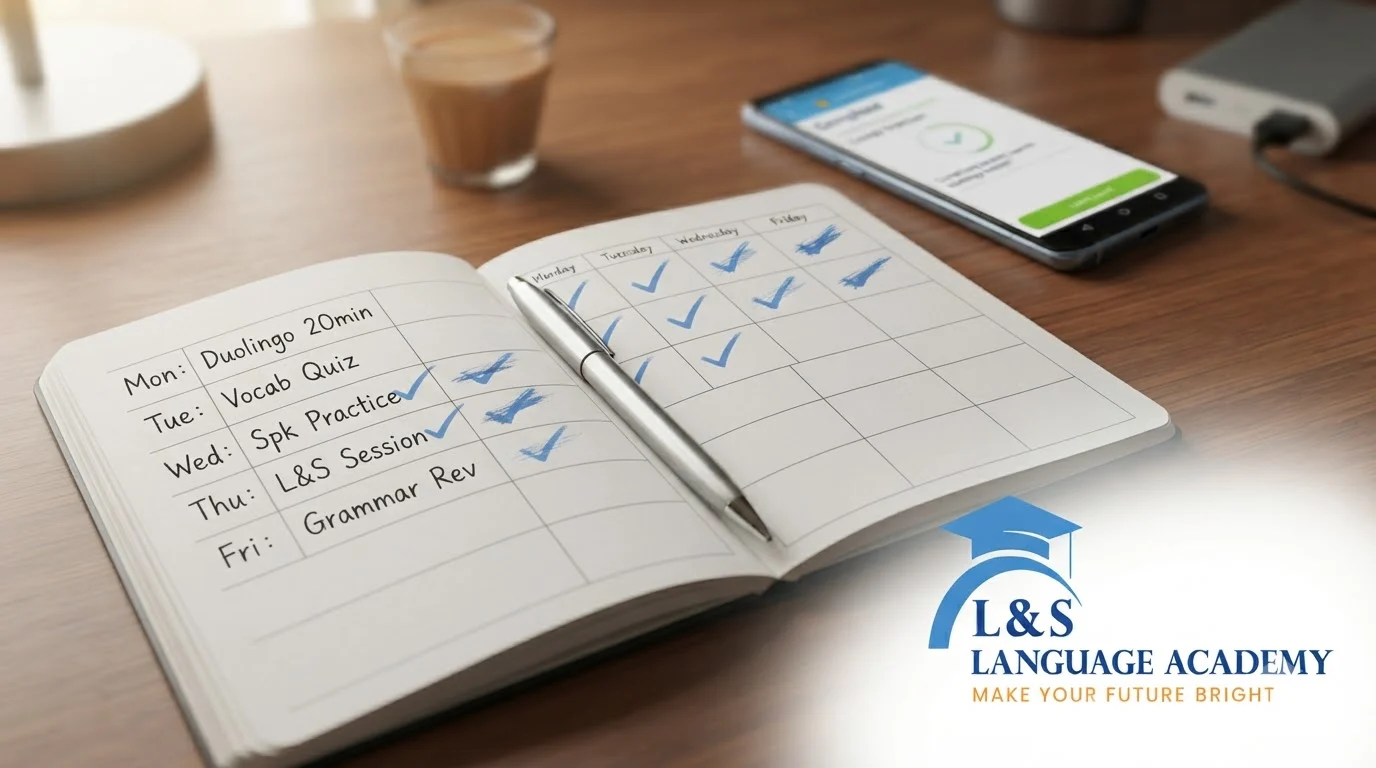
Consistency over calendar time, not hours crammed in. A scattered forty hours spread across six months behaves very differently from a steady forty hours across six weeks. The second one, almost always, produces faster, more visible progress — consistency compounds in a way occasional cramming just doesn't.
A Quick, Honest Look at the FSI Framework — and Why We're Not Copying Its Numbers
You'll see this referenced elsewhere, so it's worth explaining properly rather than pretending it doesn't exist. The U.S. Foreign Service Institute has spent over 76 years tracking how long it takes native English speakers to reach professional proficiency in other languages. Their data is genuinely well-regarded: Category I languages (Spanish, French, Italian, and similar) take roughly 600 to 750 classroom hours; Category IV languages (Mandarin, Arabic, Japanese, Korean) take around 2,200 hours — nearly four times as long. That's a real, measured difference, built on decades of actual classroom data, not a guess.
Here's the important part, though: that framework measures English speakers learning other languages. It doesn't measure the reverse — a Bengali or Hindi speaker learning English — and borrowing its specific hour-counts for that different direction isn't something we're going to do, because it's simply not what the data shows. What is genuinely useful from FSI's work is the underlying logic: how far your starting language sits from your target language changes how long it takes. That principle holds in both directions, even if the specific numbers don't transfer directly. So when a website quotes "FSI says 600 hours" for learning English as a second language, be a little skeptical — that number was never measuring your situation in the first place.
Realistic Timelines, Mapped to Actual Levels
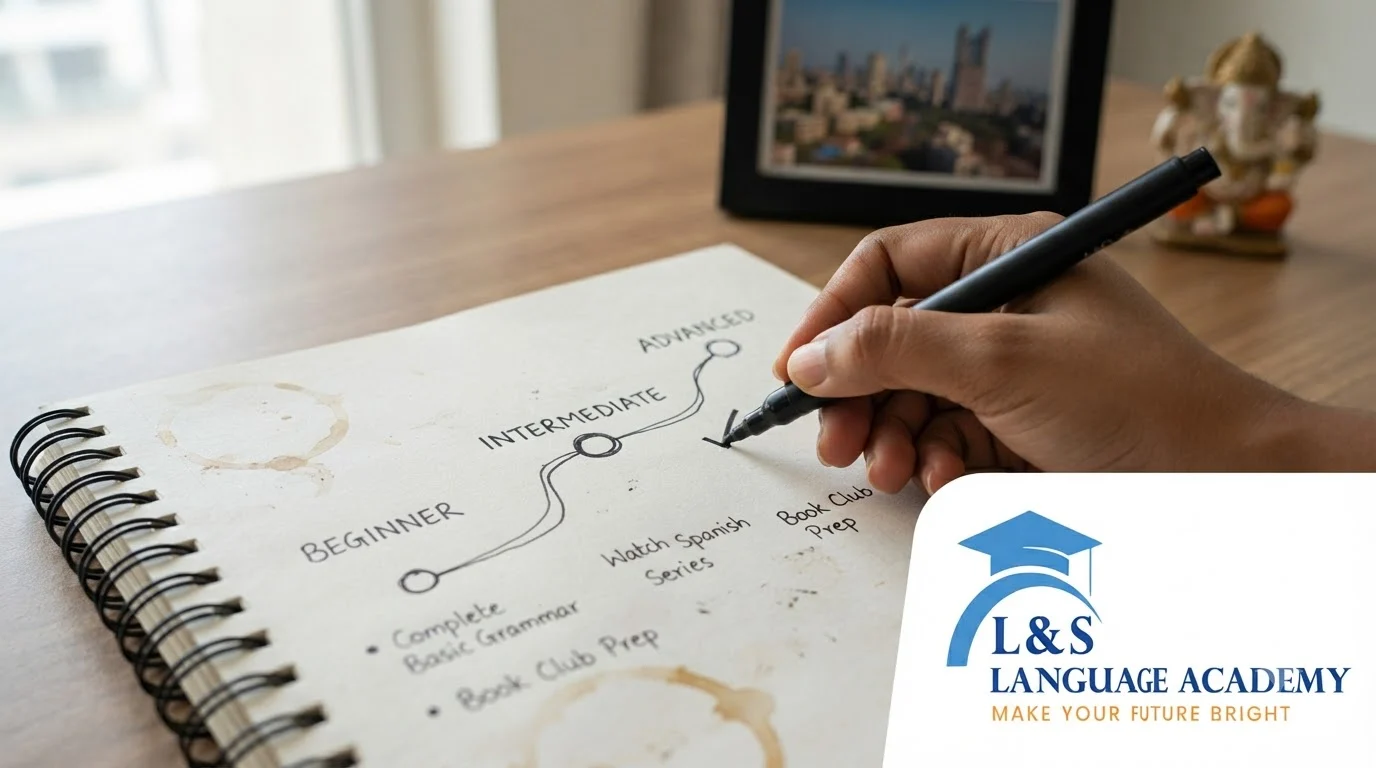
Here's where we get specific instead of vague. Rather than one number for an undefined "fluency," here's what genuinely changes at each stage of our Beginner, Intermediate, and Advanced structure.
By the end of Beginner (roughly 2–3 months, 60–80 hours), you can expect basic confidence, shorter and fewer awkward pauses, and the ability to hold a simple, everyday conversation without freezing. That's not fluency. It's a real, honest milestone, and it's the foundation everything else builds on.
By the end of Intermediate (another 2–3 months), sustained conversation becomes realistic — handling a meeting, writing a clear email, giving a short presentation without a script in hand. This is the level where most workplace English situations start feeling manageable rather than stressful.
By the end of Advanced (a further 2–3 months, so roughly 6–9 months total for the full path), you're looking at the kind of command that holds up in a fast, unscripted professional conversation — an interview, a client call, a public talk. That's genuinely closer to what most people mean when they say "fluent," and it's a realistic, evidence-based range, not a marketing number.
What's Realistic in 30 Days, and What Isn't
Let's answer this one directly, since it's genuinely one of the most-asked questions on this topic.
In 30 days of daily practice, real, noticeable gains are realistic: a shrinking hesitation gap, a bit more confidence starting a conversation, a handful of new sentence patterns that start coming out naturally instead of being translated in your head first. Genuine fluency in 30 days isn't realistic, and any course promising otherwise is telling you what you want to hear, not what's actually true.
Three months gets you further — meaningful, visible progress, often close to what our Beginner-to-Intermediate transition represents. But it's still a milestone, not a finish line. Anyone selling you a finish line at three months is selling you a story, not a timeline.
What Actually Speeds This Up

A few things make a genuine difference, and none of them are complicated:
- Prioritise speaking time over passive study time. An hour spent actually talking beats three hours spent reading about grammar rules.
- Get corrected in the moment, not after the fact. This is the same finding from our piece comparing online and offline formats — live correction, whichever format it comes in, changes the curve.
- Practise production, not just recognition. Understanding a sentence when you hear it and being able to produce that same sentence, under pressure, in a real conversation, are two different skills. Most of "fluency" is the second one.
What This Looks Like at LNS
Our Beginner, Intermediate, and Advanced levels each run 2–3 months (60–80 hours), with fees starting from ₹5,000 offline (₹3,000 online) for batch classes at Beginner level. Full level-by-level fees are on our spoken English course page.
Frequently Asked Questions
How long does it take to speak English fluently?
It depends heavily on your starting point and what you mean by "fluent." As a realistic range with regular, consistent practice: basic confidence in 2–3 months, workplace-ready conversation by 4–6 months, and the kind of command that holds up under pressure by 6–9 months.
How do I improve my English in 30 days?
Daily speaking practice, ideally with someone correcting you in real time, plus consistent reading. Expect real, noticeable gains in confidence and fewer pauses in 30 days — not full fluency, which takes longer for almost everyone.
Can I learn English in 3 months?
You can make meaningful, visible progress in 3 months, often reaching a solid intermediate conversational level with consistent practice. Full fluency in 3 months is not realistic for most learners starting from a beginner or intermediate base.
What is the proper duration to learn spoken English?
There's no single "proper" duration — it depends on your starting level and your goal. Our own course structure runs roughly 6–9 months across Beginner, Intermediate, and Advanced for a genuinely thorough foundation.
Is it true that some courses promise fluency in a few weeks?
Some do claim this, and it's worth being skeptical of it. Real, visible progress in a few weeks is genuinely possible; full fluency in that timeframe isn't, regardless of what a course's marketing says.
Does watching English movies or shows help me speak faster?
It helps your listening comprehension and exposes you to natural rhythm, but it doesn't replace actual speaking practice. Watching builds recognition; speaking builds production, and fluency depends mostly on the second one.
Why do different websites give such different timelines for learning English?
Mostly because they're quietly answering different questions — some mean basic confidence, others mean full professional fluency, and few explain which one they're talking about before giving you a number.
Does starting from zero take longer than having some school English already?
Yes, generally. Most adult learners in Kolkata already have some grammar and reading foundation from school, which is a real head start over starting completely from scratch, even if speaking confidence is still low.
Is it better to study more hours per week or stay consistent over a longer period?
Consistency over time tends to win. A steady, smaller number of hours spread evenly across weeks generally produces better, more lasting results than the same total hours crammed into a short burst.
Does correction really matter, or does practice alone work?
Correction matters more than most people expect. Practice without correction can reinforce mistakes just as easily as it builds good habits, since repetition alone doesn't tell you which version is right.
What's a realistic goal for someone preparing for a job interview in English?
Reaching a solid Intermediate level is usually enough for most interview situations — sustained conversation, clear answers, and the confidence to handle follow-up questions without long pauses.
Ready for an Honest Timeline, Not Just a Promise?
Every learner's starting point is different, and a demo class is the fastest way to find out yours. Book one, and we'll give you a genuinely realistic estimate, not a marketing number.